

Part 10: Anamnesis
Finally... a chink of light amongst these Dark Forces. But remember that the first matrix we exit is not the final one. The line between Plato, Christ, and Buddha.

So, how to escape from The Black Iron Prison?

I mentioned in my essay on Philip K. Dick’s idea of the BIP that his proposed solution could be summed up in one word: anamnesis.
It comes from the Greek ‘ἀνάμνησις’, which means un-forgetting, or ‘a loss of forgetfulness’.
At first glance this seems odd; we tend to think of forgetting as something that happens to us - a loss, a fading, a disappearance... so how can one lose a loss?
But there is a deeper sense in which we have forgotten something essential. Not facts, football scores, or telephone numbers, but who we are, what we are. That we are playing a game, not being pushed around by pieces on a board: we are not the passive victims of Fate.
Anamnesis is the practice of remembering this.
Plato’s Slave Boy
The idea goes back to Plato, particularly in the Meno and the Phaedo. Plato believed that the soul is immortal and has seen everything before birth. When we are born, we forget. Learning is therefore not acquiring something new, but remembering what we already know.
Socrates demonstrates this with a slave boy; he asks the boy questions about geometry without telling him the answers. Through guided questioning, the boy reaches the correct solution. Socrates argues that the boy must have known this all along - the questions merely triggered the memory.
It sounds charming, almost obvious. But there is a deeper implication: if we can recognise perfect forms - Beauty, Equality, Justice - despite never having encountered them in the physical world, then our souls must have encountered them somewhere else. The physical world is a shadow of a more real realm that we have temporarily forgotten. That is essentially the Platonic position.
Making the Past Present
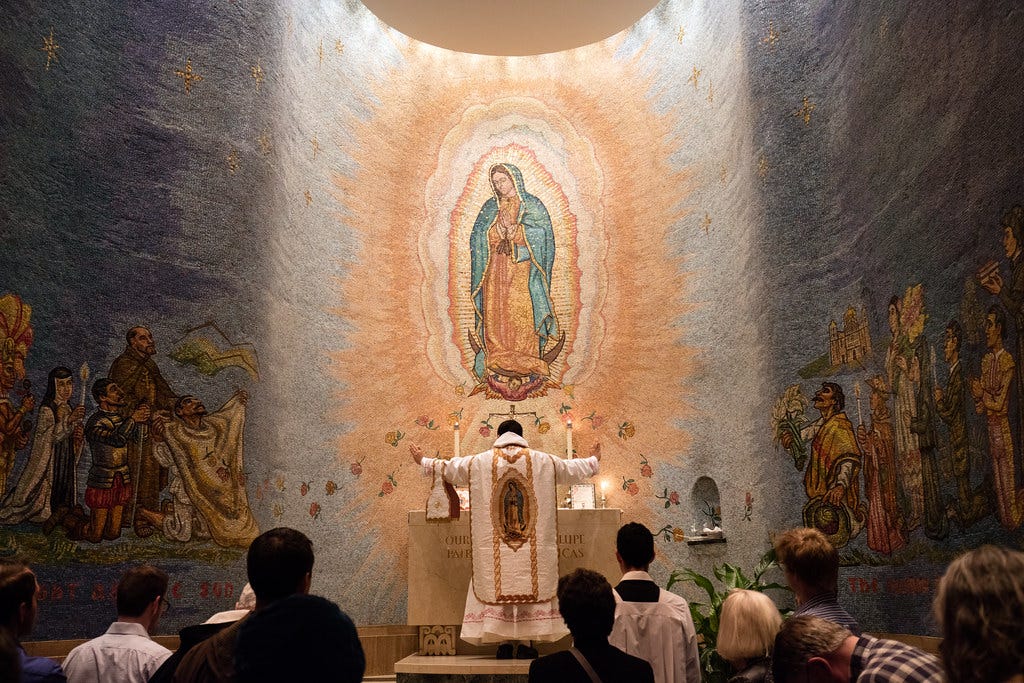
Christian theology took this word and gave it a specific meaning. In the liturgy, particularly the Eucharist, anamnesis is not merely recalling something that happened long ago, it is making the ‘past’ event present. Or rather recalling that the event is happening now, in a timeless dimension where ‘past’ and ‘present’ have no meaning.
When the priest recites the words of institution - “Do this in memory of me” - it’s not merely commemorating someone who was alive, and now is not. The sacrifice of Christ becomes a present reality. What is normally thought of as ‘past’ is not re-enacted or repeated, but participated in.
This is akin to the difference between looking at a photograph of a meal and sitting down to eat it. One is a representation, a mental image; the other is communion, participation in an act which never began nor ended, yet which is nevertheless ferociously real.
There is a kind of remembering that is purely mental - facts, dates, narratives. Then there is a kind of remembering that is visceral, embodied, transformative, even mindblowing. The latter is anamnesis. Professor John Vervaeke would call these, respectively, ‘propositional’ knowledge and ‘participatory’ knowledge. Our language struggles to cope with the depth of meaning here... or is it we that turn away from it, leading to a paucity of words to point to it?
The Rediscovery of the Soul
Which brings us back to PKD and the Black Iron Prison (BIP). Dick saw humanity as under a spell, infected by a mind-virus that colonises our psyche. One of its main effects is that it tells us there is no mind-virus. It induces a negative hallucination - we cannot see what is right in front of us.
In my essay on the BIP I suggested that anamnesis is nothing less than the rediscovery of the soul . The gap between mind and soul is where the malware, the hallucination, hides. To close that gap, as Jung also advised, we must enter the darkness rather than postpone it.
“We are always, thanks to our human nature, potential criminals. In reality we merely lacked a suitable opportunity to be drawn into the infernal melee. None of us stands outside humanity’s black collective shadow.” - C. G. Jung
This is therefore shadow work. Anamnesis is not a comfortable awakening to light and love. It is a descent into what you have repressed, denied, split off. You cannot remember what you refuse to see. Look at the state of the world if you are in any doubt what effects massive collective denial of the shadow can have. We are watching in real time what happens when people project their shadow onto ‘the other’. These esoteric concepts are pointing to seriously consequential outcomes.
Only the fool can permanently neglect the conditions of his own nature - C. G. Jung (both quotations are from ‘The Undiscovered Self’, 1957)
If you want to know who you really are, you need to accept everything that comes up. It’s terrifying, and that’s why almost no-one ever does it. Yet, it may be the only way out of our predicament.
Players, Not Pieces
Anamnesis is also the antidote to the trap of specialness. When you finally ‘exit the matrix’ and realise that (among other things) money, government, and language are basically collective hallucinations, there is a strong temptation to feel special, awake, superior to the sleepers, the ‘sheeple’.
However this is merely exiting the lobby. When this happens we may have stepped into a more insidious trap - the Black Iron Prison hands us a badge that says “Awakened” and suggests that we wear it proudly (see every corrupt guru who started with a genuine ‘enlightenment’ experience for details). The exit from one matrix leads to another matrix; maybe a more pleasant one, maybe a thinner veil of illusion, but it’s a matrix nonetheless.
True awakening involves anamnesis. We remember that we are the players of the game, not the pieces. When you realise this, you don’t need to flip the board over and scream that the game is rigged, or keep reminding yourself how amazing you are for having awakened. You simply remember who you are (i.e. not separate from the Whole), and start playing consciously.
The trap is believing you have found the exit. The trap is the certainty, the feeling of being special. The one who says, “I have exited THE matrix,” is asleep in a new dream.
The one who says, “I see the prison walls, and I see the open door to the corridor of endless matrices, and I choose to remain here to help others see,” is beginning to wake up.
The Practice of Anamnesis
All of this is well and good, but what does it actually mean? How do you practice anamnesis?
It begins with the recognition that forgetting is active, not passive: we invest energy into maintaining our illusions. We defend our self-image and project our shadow onto others. Essentially, we’re making a big effort to avoid the truth.
If you’re feeling ‘tired of it all’, there’s a good chance that this effort is what you’re tired of.
Anamnesis is the withdrawal of that investment. It’s the willingness to sit with discomfort without immediately reaching for distraction. To notice when you are caught in a reactive pattern and simply observe it rather than act it out... yes, easier said than done, but what choice do we have? To follow the thread of “why am I doing this?” all the way down, even when the answer is not flattering. Or is deeply uncomfortable.
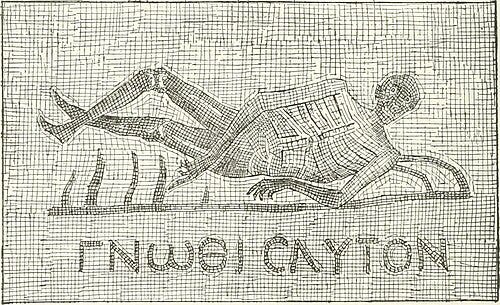
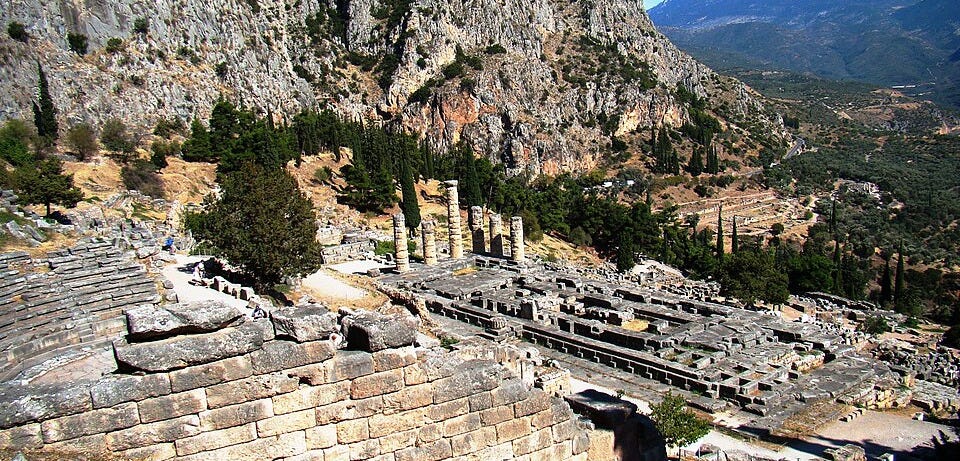
The Greeks had a word for this too: gnothi seauton (Γνῶθι σεαυτόν, written in stone on the Temple of Apollo at Delphi) - ‘know thyself’. But perhaps it should be: ‘remember thyself‘.
The Bodhisattva Path
Philip K. Dick suggested that we cannot “leave” the Empire because the Empire is everywhere. It is the structure of the reality we inhabit. “The only real way out,” he wrote, “is a voluntary way back in.”
“When you think you are out of the maze—i.e., saved—you are in fact still in it.” - PKD
This is what in Buddhism is called the path of the bodhisattva; integration rather than escape, immanence rather than transcendence. Not needing to leave the ‘fallen’ world, but inhabiting it fully, without illusion, and without fear, as a creation symbolic of the perfection of who or whatever created it.
Anamnesis is the means by which we step into our role as bodhisattvas. By remembering who we are, we can be present in the game without being trapped by it. We can hack the Black Iron Prison - we don’t need to escape - instead we can become conscious participants introducing new codes - empathy, nuance, humour, “both/and” thinking - into the system.
The new game of life looks a lot like this: Whoever has mastered the most perspectives when she dies, wins. - ‘The Listening Society’ by Hanzi Freinacht
The first matrix was a cage of ignorance. The second matrix is a cage of arrogance. The freedom you seek lies not in leaving the world, but in remembering why you came here. Ultimately, when we participate in anamnesis and discover who we really are, we can find out that there never was a trap, we were never caught, and the BIP was nothing but our own shadow, blocking out the light of consciousness.
Transparency notice! This essay was co-written using various large language models and system prompts from a basis of my original thoughts and research. It was then edited again by me to hone it into exactly what I wanted to say. Please see this previous essay for more details on this approach to ‘collaboration with a non-human intelligence’:

Wow 💜
So so so GOOD. This essay is VERY reminiscent of A Maze of Death. I hope you are proud of this one. It is excellent. Literally perfect. ♡